La nave de los locos: Javier Ruiz

From that cave in Indonesia to this VETA by Fer Francés gallery, where Javier Ruiz’s recent work is on display, painting has shifted from seeking to depict reality to seeking to define what we mean by reality—a feat that, today, as we are immersed in a jumble of images from sources as diverse as they are confusing, is no small task. Having already overcome the technical challenge of representing reality through the image, we now face the new challenge of discerning between image and reality, or of reconciling the two factors in the healthiest way possible. Javier Ruiz’s work also plays a part in this; in this new series, he invites us to participate in that conglomeration of matter, representation, and consciousness in which reality becomes more precise and palpable to us through his painting.
At first glance, there isn’t much difference—if we consider the passage of time and speak in terms of millennia—between the process behind both forms of painting: that of the Indonesian cave and that of this artist who brings us together today in a warehouse in Carabanchel. Javier Ruiz is an artist who employs certain atavistic processes to create his paintings. His approach to raw materials is unique, for in another warehouse—an industrial warehouse in La Carolina, in the province of Jaén—pigments arrive by the kilo and are mixed with linseed oil and other binders to create the dense substance and well-defined palette that is applied to the canvases in his work. Cadmium red, lead white, ultramarine blue, and chrome yellow, which, through a mixer attached to a drill, form the impasto—almost sculptural—so characteristic of his paintings. It is curious that such a craft-based process, so intimately connected with the painting itself, takes place in an industrial warehouse. The only thing missing for this artist would be to gather and crush the raw materials from which his pigments are derived, to shake hands face-to-face with that other inaugural gesture in the history of art in the Muna cave. And it is here that his painting begins to take shape, filled with contrasts, as one of the most intimate in the contemporary scene in terms of process, but also in terms of its narrative.
Constantino Molina. Curator
-
 Javier RuizUn lugar que solo sea nuestro, 2026Oil on canvas200 x 180 cm
78 3/4 x 70 7/8 inCourtesy of Veta Galeria SLCopyright The Artist -
Javier RuizHay que conseguir el pañuelo, 2026Oil on canvas250 x 400 cm
98 3/8 x 157 1/2 in -
Javier RuizDuelo a cabezazos, 2026Oil on canvas200 x 180 cm
78 3/4 x 70 7/8 in -
Javier RuizDentro de mi, 2026Oil on canvas200 x 180 cm
78 3/4 x 70 7/8 in -
Javier RuizSe suponía que la fiesta era para todos, 2026Oil on canvas180 x 200 cm
70 7/8 x 78 3/4 in -
Javier RuizSi el hombre grande duerme, todo se arregla, 2026Oil on canvas180 x 200 cm
70 7/8 x 78 3/4 in -
Javier RuizMientras nadie se da cuenta, 2026Oil on canvas200 x 180 cm
78 3/4 x 70 7/8 in -
Javier RuizMi mesa azul y un cactus grande, 2026Oil on canvas140 x 100 cm
55 1/8 x 39 3/8 in -
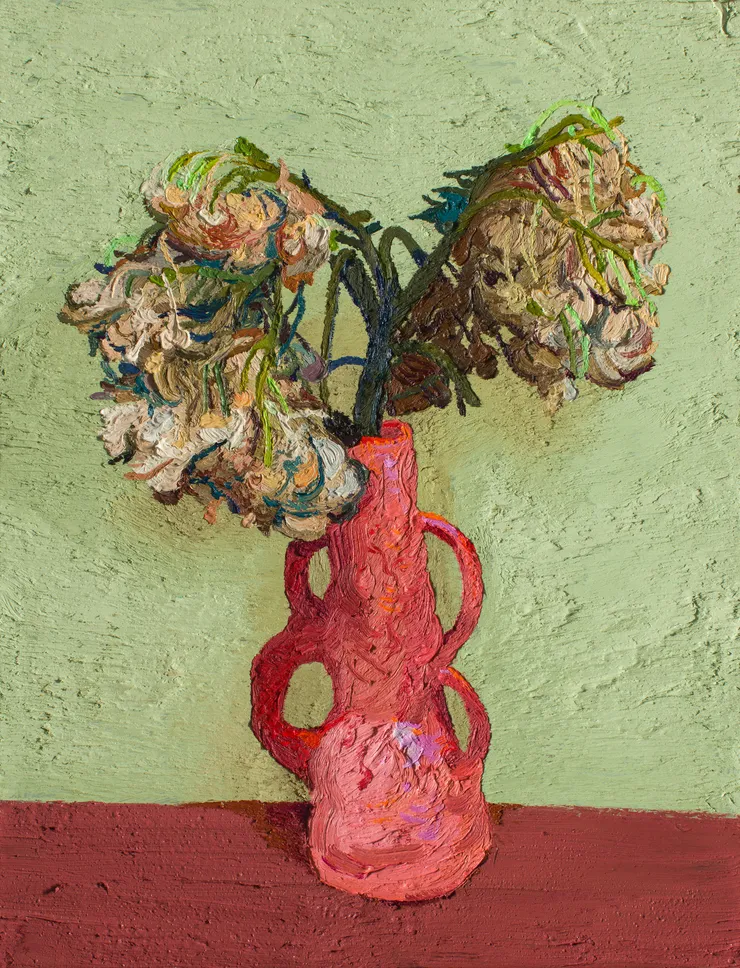
Javier RuizJarrón con flores marchitas, 2026Oil on canvas65 x 50 cm
25 5/8 x 19 3/4 in -
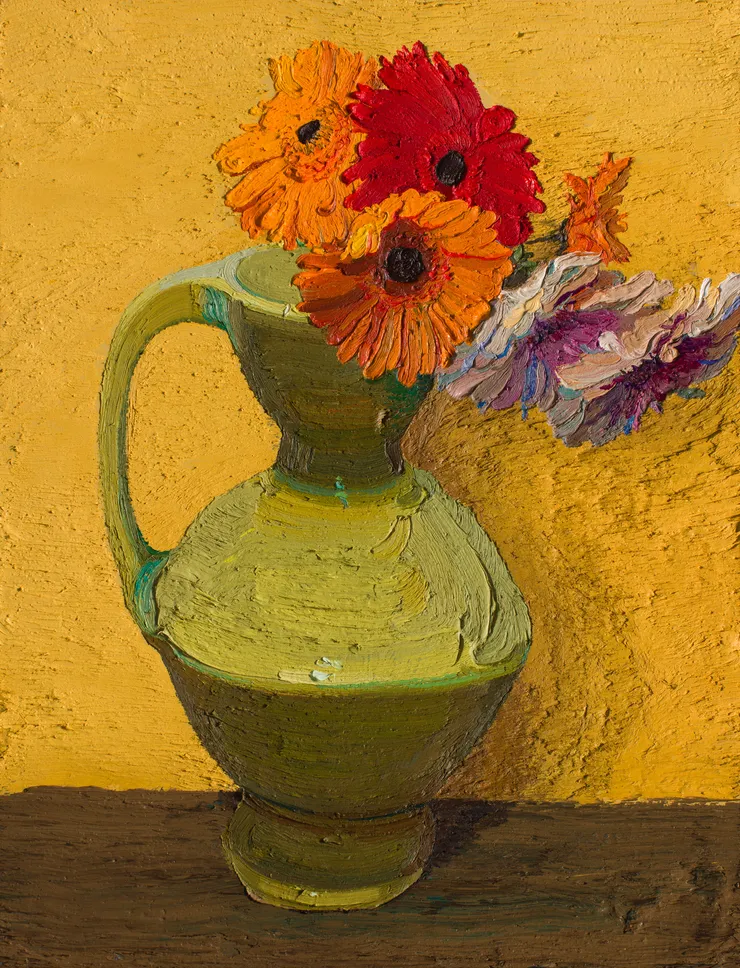
Javier RuizGerberas sobre un jarrón verde, 2026Oil on canvas65 x 50 cm
25 5/8 x 19 3/4 in -
Javier RuizReflejoz azules y flores secas, 2026Oil on canvas65 x 50 cm
25 5/8 x 19 3/4 in -
Javier RuizGerberas amarillas y violetas, 2026Oil on canvas65 x 50 cm
25 5/8 x 19 3/4 in -
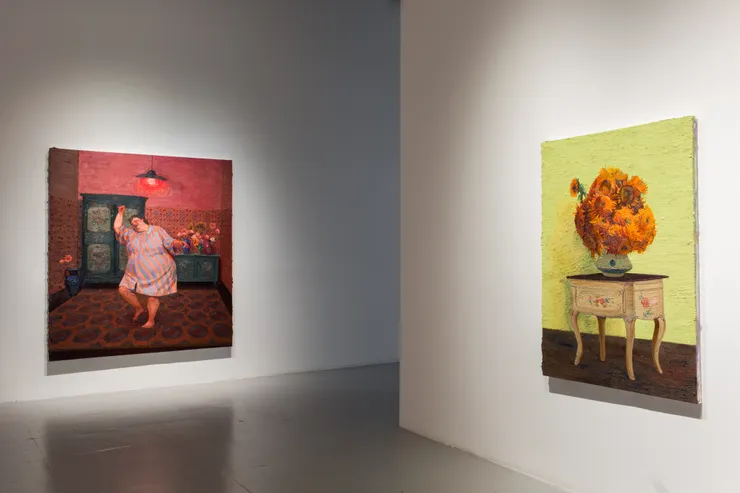
Javier RuizUna mesa con girasoles naranjas, amarillos y verdes, 2026Oil on canvas140 x 100 cm
55 1/8 x 39 3/8 in